Self-Evident
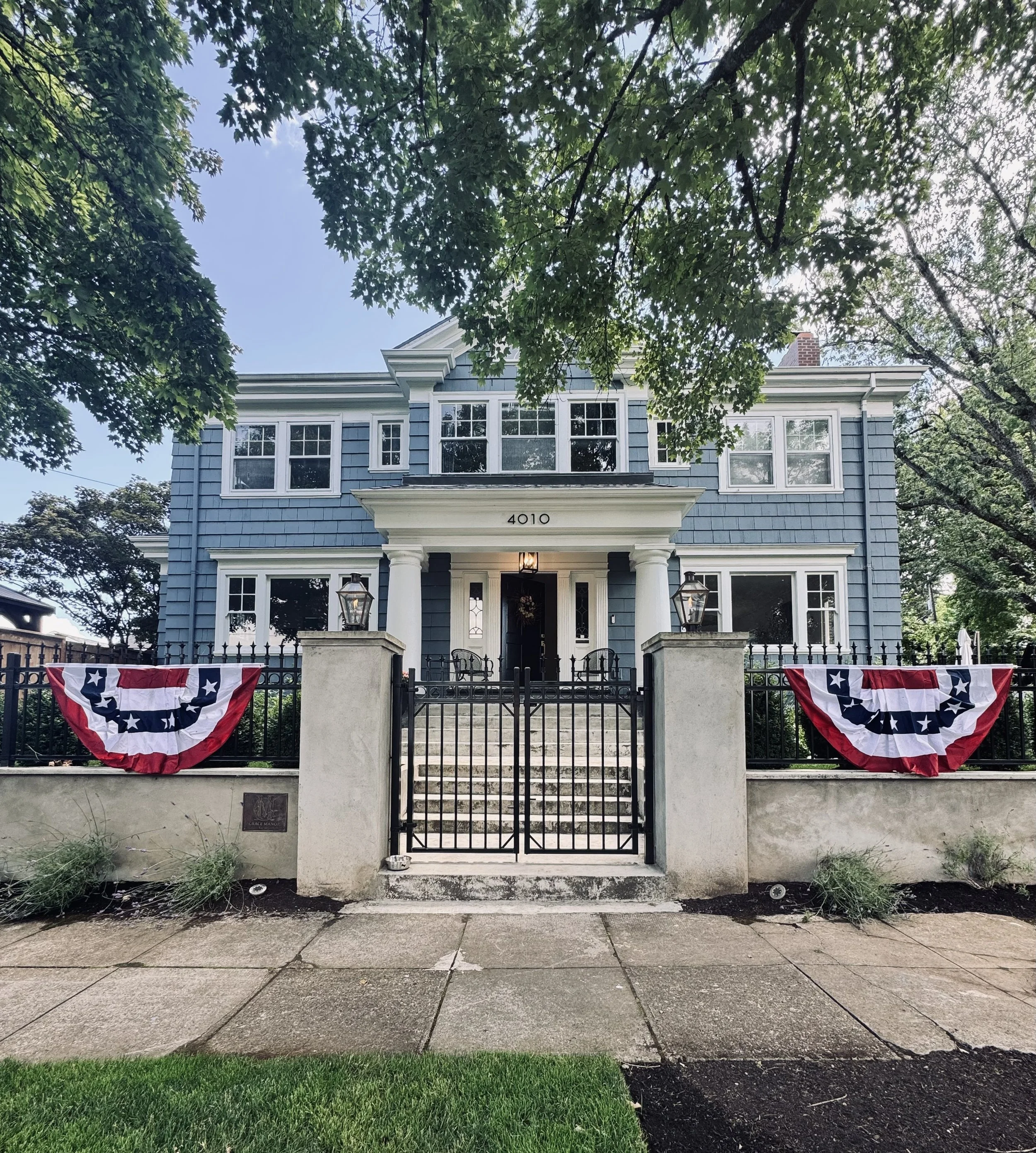
Grace Manor. July 3rd, 26
The United States of America turns 250 years old this year. I have been a citizen of this great experiment for about thirty of them.
I have spent much of that time turning over a particular phrase in my mind, the one about self-evident truths. That all men, and eventually women, are created equal. That they are endowed with the unalienable rights of life, liberty, and the pursuit of happiness. Not only for the children of this nation, but, in the sweeping ambition of that founding vision, for all of humankind. What a vast and all-encompassing belief to carry alongside the burning desire to be freed from the taxation of tea.
As the Declaration of Independence matures into two and a half centuries of service to its people, I find myself less interested in catastrophizing the age we live in, the AI-manufactured blur of what is real, the noise, the fracture, and more drawn to the deeper question the document asks of us: Who do you believe yourself to be? What do you believe you deserve? Self-worth. Self-love. The audacity to pursue your own happiness. These are radical propositions, still.
I turn 50 this year.
The things most self-evident to me, after a life lived across continents and deep into my own self, are not so much our rights, but what precedes them: our needs. It does not matter where on this earth you are born. An infant is as vulnerable in a hut in rural India as she is in a castle in England. The need for love, for safety, for being seen and held — this is what animates her rights. And as we move into our lives, our needs shift and change shape, and that is precisely when equality must do its work. Because your needs are not my needs. But they are just as real to you as mine are to me.
This strikes me as one of the more sophisticated truths available to us: that my neighbor's need is as valid as my own, even when it looks nothing like mine. That we are both equally endowed with the right to have it met. Not the same need. The same right.
I cannot think about this without arriving at Jesus and the golden teaching: love others as you love yourself. Which, of course, requires that you love yourself first. That you believe you are worth the pursuit.
And then there is the old and sometimes wise Mick Jagger, offering his own vision: you can't always get what you want, but if you try, you just might find you get what you need.
So I am left here, on the eve of a quarter-millennium, thinking about beginnings.
The beginning of these United States. A time when there was so much need for revolution. So much need for independence from actual oppression. What did those early Americans need? And in the exhausting, imperfect, astonishing work of answering that question, what did they leave us? A beacon. A document. A set of ideas still radical enough to be argued over, still alive enough to be worth arguing about.
What we do with that today is still unfolding. Some days I think we are getting it right. Many days I am less sure. But I take some comfort in knowing this conundrum almost certainly plagued people in 1776 as well. The imperfection is not a failure of the vision; it is the condition of the work.
We are, if nothing else, an imperfect Union.
And I, for one, am forever grateful to be an American. South American. North American. All American.